Manasija Monastery is one of the most important and visually striking medieval monuments in Serbia. Located in eastern Serbia near the town of Despotovac, Manasija is unique for its combination of spiritual, cultural, and military significance. Surrounded by massive defensive walls and towers, the monastery looks more like a fortress than a religious complex—yet inside, it preserves some of the finest examples of medieval Serbian art and intellectual history.
This in-depth travel guide to Manasija Monastery covers its history, architecture, frescoes, cultural importance, visiting tips, nearby attractions, and practical information. If you are interested in medieval history, Orthodox heritage, or planning an eastern Serbia itinerary, Manasija Monastery is an essential stop.

Why Visit Manasija Monastery?
Manasija stands apart from many other Serbian monasteries for several reasons:
- It is one of the best-preserved fortified monasteries in the country
- It played a crucial role in medieval Serbian culture and education
- Its frescoes represent the peak of late medieval Serbian art
- The site combines spiritual calm with dramatic military architecture
- It is easily combined with nearby natural attractions
Unlike monasteries hidden deep in valleys or mountains, Manasija was built to project strength. Visiting it feels like stepping into a time when faith, politics, and defense were inseparable.
Where Is Manasija Monastery?
Manasija Monastery is located near Despotovac, in eastern Serbia, at the edge of the Resava River valley. The surrounding area is green, calm, and lightly developed, making it ideal for slow travel.
Approximate distances:
- Belgrade: ~140 km (2.5–3 hours by car)
- Kragujevac: ~110 km
- Veliki Buk Waterfall: ~20 km
- Resava Cave: ~15 km
Because of this clustering of attractions, Manasija is often part of a full-day eastern Serbia route.
Historical Background: The Vision of Despot Stefan Lazarević
Manasija Monastery was founded in the early 15th century by Despot Stefan Lazarević, one of the most influential rulers in medieval Serbian history. A warrior, statesman, poet, and patron of the arts, Stefan ruled during a turbulent period marked by the growing pressure of the Ottoman Empire.
Manasija was intended to serve multiple purposes:
- A spiritual center
- A royal endowment
- A place of learning and manuscript production
- A fortified refuge in times of danger
Construction lasted from approximately 1406 to 1418. The monastery became the heart of the Resava School, one of the most important medieval Serbian centers of literacy and translation. Scholars here worked on copying, correcting, and standardizing religious and philosophical texts, influencing Serbian culture for centuries.
The Resava School: Manasija as a Cultural Center
Manasija’s importance goes far beyond architecture. The monastery was home to the Resava School, a major medieval intellectual movement.
Its contributions included:
- Translation of Greek and Byzantine texts into Serbian
- Standardization of church language and orthography
- Preservation of religious and philosophical manuscripts
At a time when much of Europe faced instability, Manasija served as a beacon of scholarship and cultural continuity. This legacy makes it not just a religious monument, but a cornerstone of Serbian written culture.
Architecture of Manasija Monastery
Fortified Walls and Towers
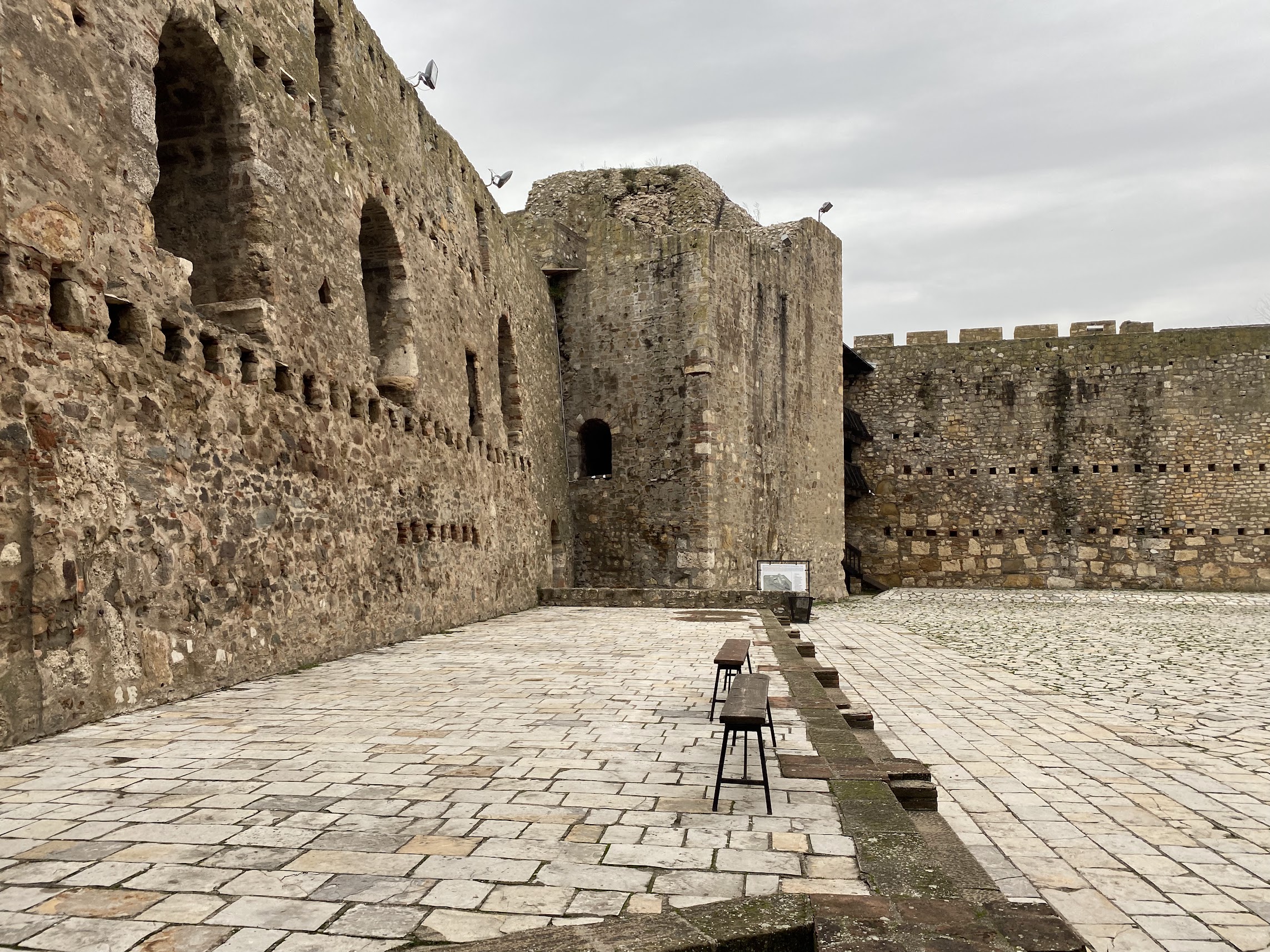
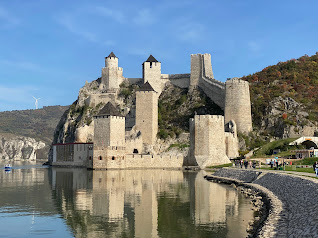
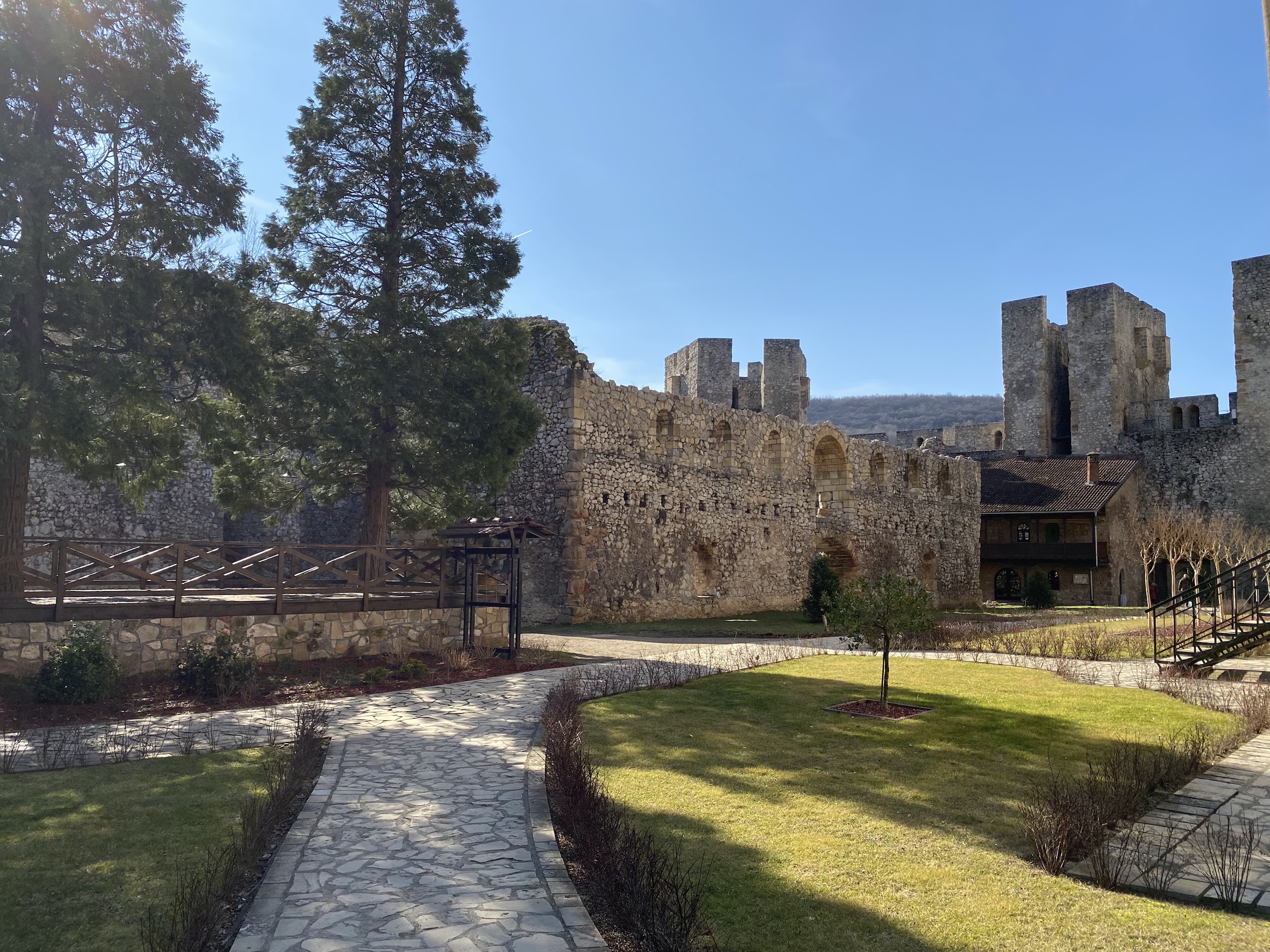
Manasija is surrounded by imposing defensive walls reinforced with 11 massive towers, making it one of the most heavily fortified monasteries in Serbia.
Key features:
- High stone ramparts
- Narrow defensive openings
- Towers designed for archers and later firearms
The fortifications reflect the political reality of the time: monasteries were not only spiritual sanctuaries but also strategic strongholds.
Walking around the outer walls gives a strong sense of the monastery’s original defensive power.
The Church of the Holy Trinity
At the heart of the complex stands the Church of the Holy Trinity, built in the Morava architectural style, which is characteristic of late medieval Serbia.
Architectural elements include:
- A central dome
- Decorative stonework
- Harmonious proportions
- Byzantine-influenced layout
The exterior is elegant but restrained, emphasizing balance rather than excess.
Frescoes of Manasija: Art at Its Peak
The interior frescoes of Manasija are considered among the finest examples of medieval Serbian painting.
Although some were damaged over time, many have survived and reveal:
- Sophisticated composition
- Expressive figures
- Rich but controlled color palette
- Strong Byzantine artistic influence
Particularly notable are:
- Portraits of Despot Stefan Lazarević
- Scenes from the life of Christ
- Liturgical and symbolic compositions
Viewing the frescoes requires patience and attention to detail. They are not designed to impress instantly, but to unfold gradually as you spend time inside the church.
Visiting Manasija Monastery Today
What to Expect as a Visitor
Manasija is an active monastery, which means:
- Modest dress is required inside the church
- Silence and respectful behavior are expected
- Photography inside may be restricted
Outside, visitors are free to walk around the walls, towers, and courtyard at a relaxed pace.
Opening Hours and Access
Manasija is generally open daily, though exact hours may vary depending on season and religious events. Entry is usually free or requires a small donation.
It is best to visit during daylight hours to fully appreciate the architecture and surroundings.
Best Time to Visit Manasija Monastery
- Spring (April–May): Green landscape, mild temperatures
- Summer (June–August): Easy access, but warmer and busier
- Autumn (September–October): Ideal light, calm atmosphere
- Winter (November–February): Quiet and atmospheric, but colder
Autumn is often considered the most rewarding season for photography and reflection.
Photography Tips
Best photography spots include:
- The monastery walls from outside the complex
- Towers against the sky in late afternoon light
- Courtyard views framing the church
- Details of stonework and gates
Interior photography depends on current rules—always ask before shooting.
Nearby Attractions to Combine with Manasija
Manasija is ideally located for a full-day itinerary.
Veliki Buk (Lisine) Waterfall
Veliki Buk Waterfall is one of Serbia’s most powerful and beautiful waterfalls. It pairs perfectly with Manasija, offering a strong contrast between culture and nature.
Resava Cave
Resava Cave features massive underground chambers and guided tours. It adds geological depth to the historical experience of Manasija.
Despotovac
The nearby town of Despotovac provides basic services, cafés, and restaurants. It’s a convenient stop for lunch or a short walk.
How to Get to Manasija Monastery
By Car
Driving is the most practical option. Roads are generally good, and parking is available near the monastery.
By Public Transport
Buses run to Despotovac from larger cities, but reaching the monastery from town may require a taxi. Organized tours are also available.
How Long Should You Spend at Manasija?
- Quick visit: 45–60 minutes
- Standard visit: 1.5 hours
- Combined with nearby sites: Full day
Manasija is not rushed; its atmosphere encourages slower exploration.
Manasija Monastery Travel Guide: Final Thoughts
Manasija Monastery is one of Serbia’s most complete historical sites. It unites faith, art, scholarship, and military architecture into a single, powerful place. As both a spiritual sanctuary and a fortified complex, it reflects a decisive moment in Serbian medieval history—when culture was defended as fiercely as territory.
Whether you visit Manasija for its frescoes, its walls, or its role in the Resava School, it leaves a lasting impression. Combined with nearby natural attractions like Veliki Buk Waterfall and Resava Cave, it forms the heart of one of the richest travel regions in eastern Serbia.