
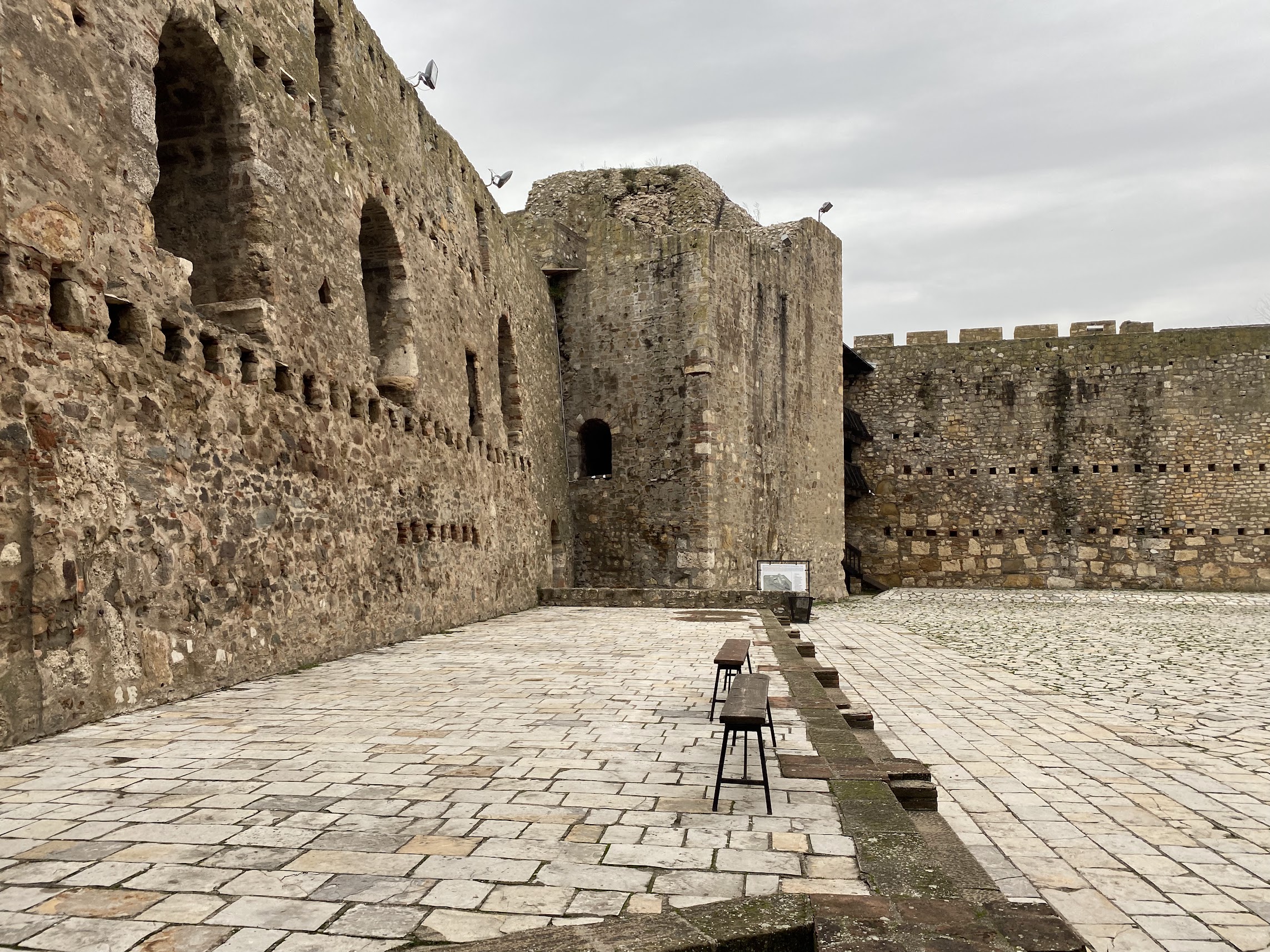
Smederevo Fortress is one of the largest and most historically significant fortresses in Southeast Europe. Situated directly on the banks of the Danube, just downstream from Belgrade, this massive stone complex once served as the capital of the medieval Serbian state. Today, it stands as a powerful reminder of Serbia’s final centuries of independence before Ottoman conquest.
This comprehensive travel guide to Smederevo Fortress covers its history, layout, what to see, how to visit, best viewpoints, photography tips, and how to combine the fortress with other attractions in the region. If you are interested in medieval history, large-scale fortifications, or planning a Danube itinerary through Serbia, Smederevo Fortress is an essential stop.

Why Visit Smederevo Fortress?
Smederevo Fortress is impressive not because of dramatic cliffs or mountain scenery, but because of its sheer scale and historical weight. Covering more than 11 hectares and built in a triangular shape between two rivers, it is one of the largest lowland fortresses in Europe.
What makes Smederevo special:
- It was the last capital of medieval Serbia
- Its walls and towers stretch along the Danube waterfront
- The fortress is integrated into the modern city
- Entry is free and open year-round
- It offers a rare look at late medieval Balkan military architecture
Unlike more compact hilltop castles, Smederevo Fortress feels like a fortified city—designed to house an entire court, army, and population.
Where Is Smederevo Fortress?
Smederevo Fortress is located in the city of Smederevo, approximately 45 km southeast of Belgrade. It lies at the confluence of the Danube and the Jezava River, which formed a natural defensive barrier during medieval times.
Distance highlights:
- Belgrade: ~1 hour by car or train
- Novi Sad: ~1.5 hours
- Golubac Fortress: ~1.5 hours by car
Because of its proximity to Belgrade, Smederevo Fortress is one of the easiest major historical sites in Serbia to visit as a half-day or day trip.
Historical Background: The Last Serbian Medieval Capital
Smederevo Fortress was built in the early 15th century by Despot Đurađ Branković, ruler of the Serbian Despotate. After losing Belgrade to the Kingdom of Hungary in 1427, Đurađ needed a new capital—one that was defensible, strategically positioned, and politically neutral between powerful neighbors.
The chosen location on the Danube allowed:
- Control of river trade routes
- Strong natural defenses
- Rapid construction using river transport for materials
The fortress became the political, military, and cultural center of medieval Serbia. However, its prominence was short-lived. In 1459, only a few decades after its completion, Smederevo fell to the Ottoman Empire, marking the end of the independent medieval Serbian state.
Despite damage from warfare, earthquakes, and later industrial use, much of the fortress has survived, making it a site of exceptional historical continuity.
Architecture and Layout of Smederevo Fortress
Smederevo Fortress follows a triangular layout, inspired by Constantinople’s fortifications. It consists of two main sections:
The Small Town (Mali Grad)
This inner fortress housed:
- The ruler’s court
- Administrative buildings
- Important religious structures
It was the most heavily fortified area and served as the final defensive refuge.
The Big Town (Veliki Grad)
Surrounding the inner core, the Big Town contained:
- Military barracks
- Storage facilities
- Workshops
- Civilian population areas
Together, the fortress includes:
- Over 25 massive towers
- Walls up to 25 meters high
- Thick stone ramparts adapted for both medieval and early gunpowder warfare
The scale is best appreciated by walking the perimeter—photos alone rarely convey how large the complex truly is.
Visiting Smederevo Fortress: Practical Information
Opening Hours and Entry
One of the most appealing aspects of Smederevo Fortress is accessibility:
- Open year-round
- No entrance fee for general access
- Freely walkable during daylight hours
Certain areas may occasionally be restricted for safety reasons or events, but most of the fortress remains open to visitors.
Getting Around Inside the Fortress
The terrain is mostly flat, with grassy areas, stone paths, and wide open spaces. Unlike cliffside fortresses, Smederevo is suitable for:
- Families with children
- Casual walkers
- Visitors with limited mobility (some uneven surfaces apply)
Climbing towers is generally restricted, but the scale of the walls and courtyards more than compensates.
What to See at Smederevo Fortress
The Danube Walls
The fortress walls facing the Danube are among its most striking features. Walking along this section offers uninterrupted river views and a strong sense of how the fortress controlled water traffic.
Cargo ships and river cruisers passing close to the walls create a unique contrast between medieval architecture and modern transport.
Towers and Ramparts
The numerous towers vary in shape and size, reflecting different defensive roles. While most are not open for climbing, their spacing and mass illustrate the fortress’s military logic.
Look for:
- Corner towers with wider bases
- River-facing defensive positions
- Gate towers controlling access points
Jezava River Side
The Jezava side of the fortress is quieter and often less visited. It’s a good area for photography and reflection, especially in the morning or late afternoon.
Historical Markers and Remains
Throughout the fortress, informational panels and visible foundations mark:
- Former palace structures
- Religious buildings
- Industrial reuse during later centuries
These traces help visitors imagine the fortress as a functioning medieval capital rather than a static ruin.
Best Views and Photography Tips
Smederevo Fortress offers excellent photography opportunities despite its lowland location.
Best photo spots:
- Danube-facing walls at sunset
- Wide shots from inside the Big Town
- Exterior views from the river promenade
- Tower silhouettes against the sky
For the best light, visit early morning or late afternoon. The fortress’s stone surfaces respond well to angled light, emphasizing texture and scale.
Things to Do Around Smederevo Fortress
Walk the Danube Promenade
Just outside the fortress walls, the Danube promenade is ideal for a relaxed walk after sightseeing. Cafés and benches along the river make it easy to extend your visit without rushing.
Explore the City of Smederevo
Smederevo itself is calm and approachable. While not a major tourist hub, it offers:
- Local restaurants
- Wine shops featuring regional vineyards
- Parks and river views
The city pairs well with the fortress, creating a balanced half-day experience.
Wine Routes of the Danube Region
The area around Smederevo is known for viticulture, with a tradition dating back to Roman times. If you have a car, consider visiting nearby wineries or wine cellars as part of your trip.
How to Get to Smederevo Fortress
By Car
Driving from Belgrade is fast and straightforward. Parking is available near the fortress and in surrounding streets.
By Train
Regular trains connect Belgrade and Smederevo. The train station is within walking distance of the fortress, making this one of the easiest car-free day trips in Serbia.
By Bus
Buses run frequently from Belgrade and other regional centers. Travel times are comparable to trains.
Best Time to Visit Smederevo Fortress
- Spring (April–June): Mild temperatures, green grounds, excellent walking conditions
- Summer (July–August): Hot but manageable due to open space and river breeze
- Autumn (September–October): Ideal light, fewer visitors, comfortable weather
- Winter (November–March): Atmospheric but colder; best for short visits
Because it is open and spacious, Smederevo Fortress is less affected by crowds than many tourist sites.
How Long Should You Spend at Smederevo Fortress?
- Quick visit: 45–60 minutes
- Standard visit: 1.5–2 hours
- Combined city walk: Half day
Its proximity to Belgrade makes it easy to fit into almost any travel plan.
Smederevo Fortress vs Other Serbian Fortresses
Compared to Golubac or Kalemegdan:
- Smederevo is flatter and larger
- Less dramatic scenery, but more monumental scale
- Stronger emphasis on political history than military spectacle
Each fortress tells a different chapter of Serbian history, and Smederevo represents the final medieval one.